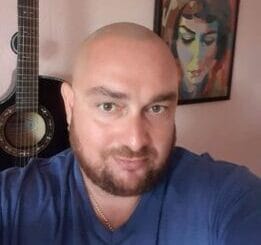
Vladimir Kalugin

He is the filmmaker of Alfie: All That You Love Will Be Carried Away Dollar Baby film.
SKSM: Could you start with telling me a little bit about yourself? Who are you and what do you do?
Vladimir Kalugin: I’m a driven, self-taught filmmaker and actor. I’ve been self-employed since my early twenties, building and running my own business before eventually selling it. After that, I shifted my focus fully into filmmaking, learning the craft hands on by writing, acting, producing, and directing my own work. I now run a production company that focuses on narrative films and business driven storytelling, with Alfie:All That You Love Will Be Carried Away marking an early step in that transition.
SKSM: When did you know you wanted to become a filmmaker?
Vladimir Kalugin: The first time I stepped onto a film set as an actor, I knew I wanted to be part of that world. I was immediately drawn to the process and wanted to understand how everything worked. I remember one particular shoot when I was hired for a commercial in Chicago. Between takes I must have asked the cinematographer a hundred questions. From there, I started reading, watching films more closely, and getting on set as often as possible, whether acting or helping out, simply because I wanted to be involved and learn.
SKSM: When did you make Alfie: All That You Love Will Be Carried Away Dollar Baby film?
Vladimir Kalugin: I made Alfie: All That You Love Will Be Carried Away in early 2024. A lot of time went into pre-production, including developing the script, planning shots, creating a shot list that supports the story and the meaning of each angle, and testing cameras. The project was developed and shot over several months, which allowed me to fully explore the story and characters.
SKSM: Can you tell me a little about the production?
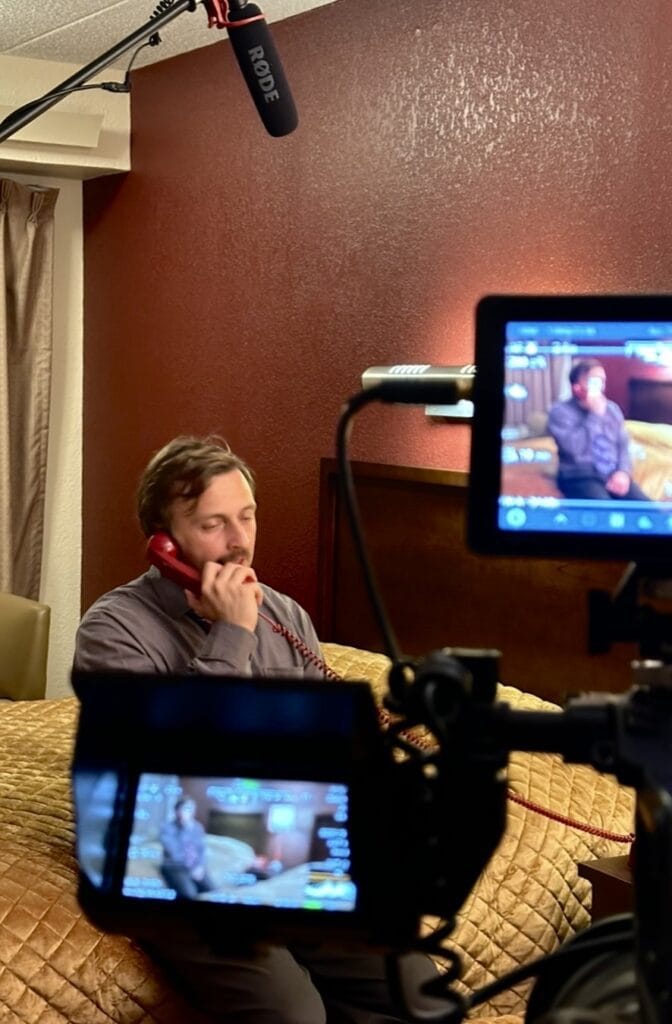
Vladimir Kalugin: Alfie was a carefully planned, character driven story with many hidden meanings throughout the film. I spent a lot of time perfecting every move and deciding exactly where everything would be placed on camera. Some scenes presented particular challenges. The park scene, for example, was shot over two separate days because we were looking for a meaning shot. The idea was to have an older man sit on a bench by himself representing “Alfie” as the world walked by but that didn’t work as we pictured so as luck would have it I noticed a squirrel perfectly framed in a silhouette on a tree and we shot it. It was a subtle detail that most people might not even notice, but it added exactly the mood we were looking for. The car scenes were especially tricky. We spent several days driving around to find the smoothest road because, for some shots, the camera was mounted and needed to stay completely steady. To add to that, we also needed a road with as few traffic lights as possible, long enough to capture a full shot, and then reset to shoot the same scene from another angle. In addition, we needed to match the light each day, so we shot the scene across three sunny days, all within the narrow 3 to 5 pm window before the sunlight started to change.
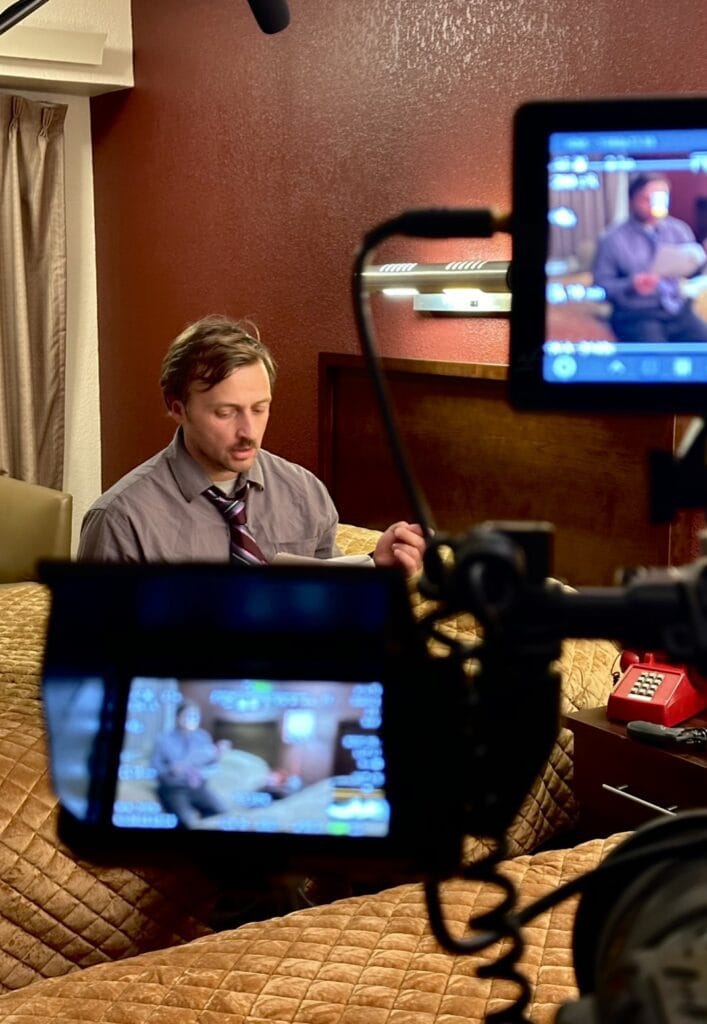
While scouting locations like the park and the “perfect imperfect” road, I was also on a mission to find the right motel. I had a very specific image in mind, and while the exterior of some motels fit, the interiors didn’t. In the end, we filmed the exterior at one motel and the interior at another, with a small makeover to match the mood I wanted. One of my favorite details was the red phone, which also carries a symbolic meaning in the scene. The motel shoot itself took place over a single, very long night. We started around 6 pm and didn’t wrap up until about 5 am, fully committed to capturing every moment exactly as envisioned.
Every choice throughout the production was deliberate, from the placement of objects to the timing of the light, to serve the story and the emotional weight of each scene.
SKSM: How much did it cost? How long did it take to film it?
Vladimir Kalugin: The film cost around $11,500 to make. We shot it over two weeks, carefully scheduling around the weather since we needed sunny, cloud-free days at specific times of day. We filmed in the order you see in the film, beginning with the park, then the car scenes, followed by the cornfield, moving on to the exterior of the motel, and finally shooting the interior scenes in a single night.
SKSM: How come you picked All That You Love Will Be Carried Away to develop into a movie? What attracted you most of this story?
Vladimir Kalugin: I was drawn to All That You Love Will Be Carried Away because of Alfie’s duality. He’s indecisive, self-conscious about what others think, but deeply human. That’s not just him, there are so many people out there like Alfie. I wanted to bring that to the surface and give him some light in the story, so people can relate. Hopefully, it lets someone see themselves in Alfie’s shoes and realize that if they stop caring so much about what others think and make that choice, they might finally have a chance to follow their own dreams.
SKSM: Besides being the filmmaker, you’re also the lead actor in the film, as well as the producer, the gaffer, the screenwriter, and so on (Let these words serve as a personal expression of admiration). What was it like wearing so many hats and what do you like most?
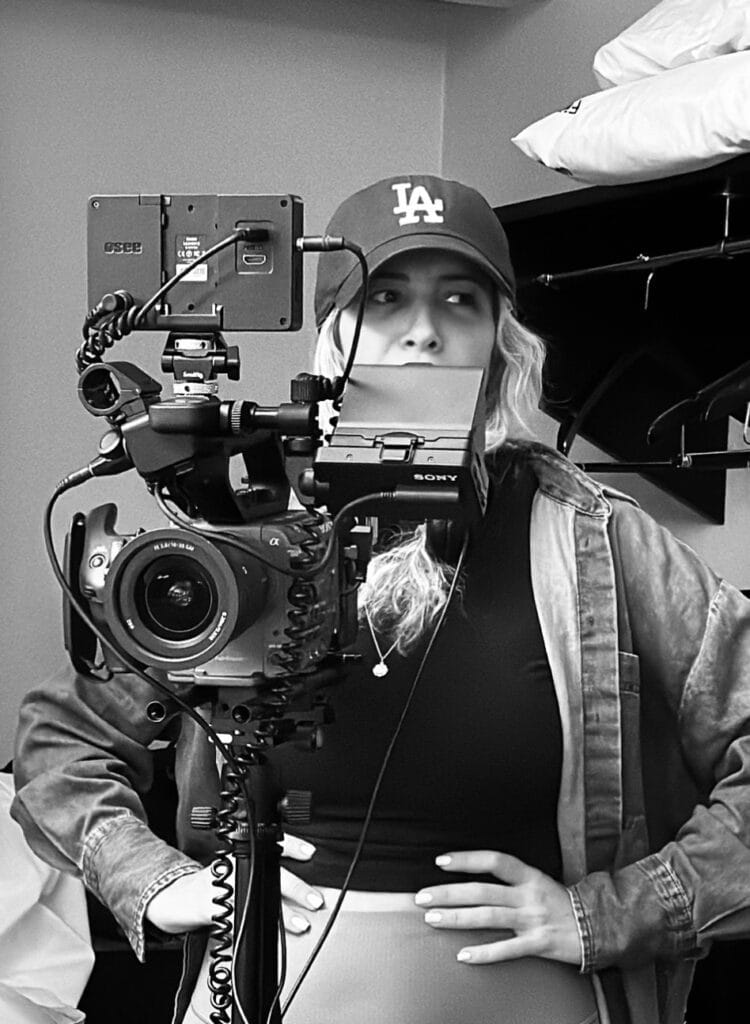
Vladimir Kalugin: It was a mix of control and learning from my mistakes. I really wanted to understand each role as fully as this film allowed me. Taking the time to imagine it, write it, and go through every step of the process. While writing, I was already thinking about how I would accomplish the shots that required direction, so I decided to pre-record instructions and time them for each scene. Directing myself added another layer to my education: even while fully immersed in the role, I still needed guidance. This was especially true during the car scenes, where I had to act, drive, ensure camera composition and make sure the pre-recorded radio dialogue, which Alfie was listening to, worked perfectly. When you love every part of creating a film, it’s hard to choose a favorite, but I honestly really enjoyed writing, directing, and seeing ideas come to life on screen.
SKSM: The beginning is different from Mr. King’s original text, and that was necessary to understand your vision for this story. How do you think the audience will react to this change?
Vladimir Kalugin: I wanted to respect Mr. King’s dialogue and the essence of his story, but I also wanted to bring in some of my own ideas, adding layers such as moments where the audience might question Alfie’s actions while also giving the story a sense of hope through the radio voice. I wanted to give viewers things to think about and let them draw their own conclusions. These changes were meant to deepen the complexity of Alfie’s character while still staying true to the spirit of the original text. I hope the audience picks up on these layers and connects with Alfie’s journey, seeing both his struggles and the possibility for light in his story.
SKSM: Can you tell us about your experience on this Dollar Baby film? Was everything planned ahead or did some things change during filming?
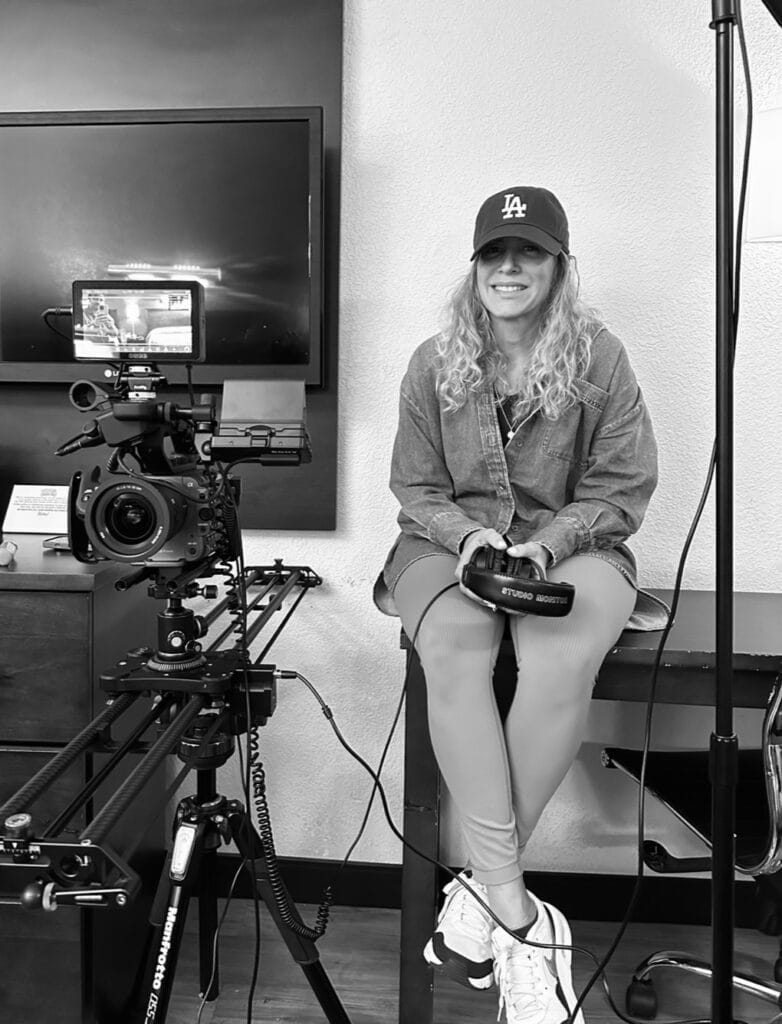
Vladimir Kalugin: Working on this Dollar Baby film was an incredible experience. It was my film school, and I learned more than I could have imagined, especially in the editing room where most of the time was spent. Editing felt like rewriting the story. It was long, but incredibly educational. I planned extensively with storyboards, shot lists, and schedules, but there were plenty of moments that changed during filming, and improvising became a big part of the process. Working with limited resources and natural light meant we had to adapt on the spot and make creative choices in real time. Those changes often led to unexpected discoveries and helped make the film feel more alive and authentic.
SKSM: Was there any funny or special moment when you made the movie that you would like to tell me about?
Vladimir Kalugin: One of the funniest and most memorable parts of making the film was coming up with different voices for the voiceover characters. I would sit and say their lines in deeper voices, adding little accents so each character sounded unique and had their own personality. All the voices on the radio, except for the radio host, were me. It was challenging, but those moments brought a lot of laughter during the recording.
SKSM: Production is over. Are there thoughts that make you think now, we could have done this differently?
Vladimir Kalugin: Now that production is over, I definitely see things I could have done differently, and that is part of the learning process. There are small choices, such as shots, timing, or how I approached certain scenes, that I might adjust if I were to do it again. It can always be better. I could spend months making adjustments, but what I really learned was to give myself a set date and call that the final product. That is what allowed the film to actually exist and for me to move forward. Those challenges and improvisations also led to unexpected discoveries that shaped the film in ways I could not have planned, and every decision, whether perfect or imperfect, taught me something and contributed to the final story.
SKSM: Were there unexpected moments or difficulties during the making of the film that have become a new point of view?
Vladimir Kalugin: Working with limited resources, natural light, and such a small crew meant unexpected challenges came up constantly. Each problem forced me to think creatively and make decisions on the spot, often leading to solutions I would not have considered otherwise. Those moments taught me to embrace flexibility, improvisation, and trusting the process. You plan it all out and then let it go, letting the universe guide you. In the end, these difficulties became opportunities that shaped the film in meaningful ways.
SKSM: What was your main goal you wanted to achieve about this film?
Vladimir Kalugin: My main goal was to show Alfie in a different light, with a hint of hope, and convey the message that you are only one decision away from changing your life, even when it feels like your world is falling apart.
SKSM: Your film has entered on the festival run. Where was it premiered?
Vladimir Kalugin: The film’s premiere has not yet been announced. We’re excited about the festival run and will share details as soon as they’re confirmed.
SKSM: Do you plan to screen the movie at a particular festival?
Vladimir Kalugin: We’re submitting the film to a range of festivals that feel aligned with the story and tone of the film, and we’re excited to see where the film finds its home.
SKSM: How did you find out that King sold the movie rights to some of his stories for just $1? Was it just a wild guess or did you know it before you sent him the check?
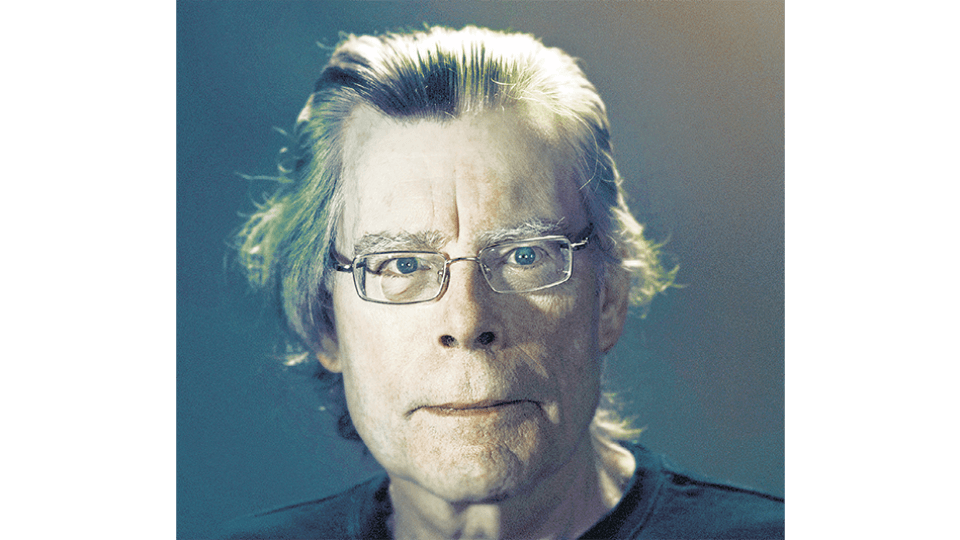
Vladimir Kalugin: I first saw the Dollar Babies program on a filmmaker’s page and got so excited that I reached out to Stephen King’s program right away. I thought it was so cool to have the chance to work with his material and bring one of his stories to life on screen.
SKSM: Are you a Stephen King fan? If so, which are your favorite works and adaptations?
Vladimir Kalugin: Yes, I’m definitely a Stephen King fan! His ability to create such vivid characters and immersive worlds has always inspired me. Some of my favorite works include The Shining, Stand by me which is based on his novelle ‘The Body”, and The Green Mile. One of my favorite adaptations is The Shawshank Redemption, which is literally one of my favorite movies.
SKSM: What are you working on nowadays?
Vladimir Kalugin: Right now, I’m focused on creating my first feature film. At the same time, I’m developing a few other projects, both shorts and features, and exploring stories that let me dive deeply into character driven narratives. I’m also refining my filmmaking skills and experimenting with different styles, so my days are a mix of writing, creating, and planning future productions.
SKSM: What one thing people would be surprised to know about you?
Vladimir Kalugin: Something people might be surprised to know is that I used to work in home lending before buying an auto collision shop at the age of 22. Looking back, I see it was my first step toward creativity, especially in transforming the cars to look better than they ever had before. I completely transformed the shop before selling it and moving on to the next chapter. And now I’m here, fully focused on filmmaking.
SKSM: Thanks for taking the time to answer my questions. Is there anything you want to say to the fans that read this interview?
Vladimir Kalugin: I just want to say thank you to everyone taking the time to read this and follow the journey. Making this film was a labor of love, and I hope it connects with you in some way. Keep supporting independent filmmakers and stories that inspire you, because that support makes all the difference.